
💰 This page covers the street-level details of spending money in Accra: card acceptance by neighborhood, where to find ATMs, how to pay for transport, and what to carry for day trips. For Ghanaian ATM fees, cedi basics, mobile money, and tipping norms:
 Read the Ghana Money Guide →
🎧 Order Ghanaian Cedis Before You Fly
Have cash in hand when you land at Kotoka. Insured delivery, 2–5 day shipping.
Order GHS → CEI Currency ExchangeDo You Need Cash in Accra?
Yes. Accra is primarily a cash city. Mobile money (MTN MoMo) has exploded as a payment method for locals, but it requires a Ghanaian SIM and registration, making it impractical for most visitors. International hotels and upscale restaurants in East Legon, Airport Residential, and Osu accept cards, but markets, tro-tros (minibuses), street food, local restaurants, and most everyday businesses require cash. Carry GHS 100–300 per day in cedis.
Where You Will Need Cash
Makola Market (Accra's biggest market, entirely cash). Tro-tros and shared taxis. Street food vendors (jollof rice, waakye, kelewele, banku). Local restaurants (chop bars). Uber rides can be paid in cash. Art Centre (artisan market in the CBD). James Town fishing harbor and lighthouse area. Tips everywhere. Most shops outside the upscale zones.
Where Cards Work Fine
International hotels (Kempinski, Labadi Beach, Movenpick). Upscale restaurants in Osu, East Legon, and Airport Residential. Accra Mall and West Hills Mall (most shops accept cards). Supermarkets (Shoprite, MaxMart, Koala). Some cafes in Osu and Labone. Tour operators for Cape Coast and Kakum bookings. Card acceptance is growing but still limited to the higher end of the economy.
Paying by Card in Accra
Card acceptance in Accra is concentrated in the expat and tourist economy. Visa is the most widely accepted. Mastercard works at most places that accept cards. Amex is almost never accepted. Many POS terminals are unreliable, and "machine not working" is a common refrain. Always have cash as backup, even at card-accepting businesses. See the Ghana guide for more.
Osu / Oxford Street
Osu is Accra's most vibrant nightlife and dining district. Oxford Street and the surrounding blocks have restaurants, bars, and cafes that accept cards. Frankie's, Buka, and the many Lebanese restaurants accept cards. The Night Market on Friday evenings is mixed (food vendors are mostly cash, shops may take cards). This is the most foreigner-friendly neighborhood for card payments.
East Legon / Airport Residential
The affluent neighborhoods of East Legon and Airport Residential Area have the best card infrastructure. High-end restaurants (Santoku, Kōzo, Coco Lounge), international hotels, and the A&C Mall all accept cards. This is where many expats live and the businesses cater accordingly. Supermarkets like Koala and MaxMart accept cards.
Accra Central / CBD
The central business district around Independence Square and the National Museum has a mix. Banks and ATMs are plentiful. The National Museum (GHS 20) accepts cards. Hotels like the Novotel accept cards. But step into the surrounding streets and shops, and everything is cash. Makola Market, just north of the CBD, is entirely cash territory.
Makola Market
Accra's sprawling central market is 100% cash. Fabric, clothing, electronics, spices, traditional medicine, and food are all negotiated and paid in cedis. This is one of the most intense market experiences in West Africa. Bring only what you intend to spend. Keep cash in a front pocket or money belt. GHS 100–300 is enough for a morning of shopping and eating.
James Town / Ussher Town
The historic fishing neighborhoods along the coast are entirely cash. The Jamestown Lighthouse (GHS 10 entry plus tip) is cash. The fishing harbor is free to walk through but photography tips are expected. Street food and local chop bars are cash. This is the most authentic and photogenic part of old Accra, and none of it takes cards.
Labadi Beach / La
Labadi Beach (GHS 10–20 entry depending on day) accepts cash at the gate. Beach bars and food vendors are cash. The Labadi Beach Hotel next door accepts cards, but the public beach itself is a cash zone. La Teshie neighbourhood nearby is entirely local and cash-only. Bring GHS 50–100 for a beach day.
Accra Mall / West Hills Mall
Both modern shopping malls have card acceptance at most stores, the food courts, and the cinemas. Shoprite supermarket accepts cards. Game, Mr Price, and other chain stores accept cards. These malls feel like a different world from the markets and offer a reliable card-payment experience. Accra Mall is in Tetteh Quarshie, West Hills is in Weija.
Mobile Money in Accra
MTN Mobile Money (MoMo) is the way Ghana pays. Market vendors, taxi drivers, restaurants, and even government services accept MoMo. For locals it has replaced cash for many transactions. Here is what tourists need to know.
Can Tourists Use MoMo?
Technically yes, but it is not easy. You need a Ghanaian SIM card (MTN, Vodafone, or AirtelTigo) and must register with your passport at a carrier shop. Registration can take 24–48 hours to activate. If you are staying for a week or more, it is worth the effort. For shorter visits, cash and cards are more practical. Your hotel concierge can help with SIM registration.
If You Set Up MoMo
Load your account at any MTN MoMo agent (the yellow kiosks are everywhere). You can then pay at Makola Market, tro-tro stands, and restaurants by transferring to the vendor's number. MoMo agents charge a small fee to load cash (1–2%). Withdrawals are also available at any agent. This is a game-changer for market shopping if you can get it set up.
ATMs in Accra
For Ghanaian ATM fee policies, withdrawal limits, and safety tips, see the Ghana guide. This section covers where to find machines in Accra.
Look for these bank logos around Accra. Ecobank and GCB are the most reliable for foreign cards.
 Ecobank
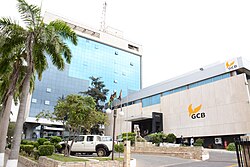 GCB Bank
 Stanbic
Osu / Oxford Street Area
Ecobank, GCB, Stanbic, and Fidelity Bank have ATMs along Oxford Street and the surrounding blocks. This is the easiest area for tourists to find working ATMs. Most accept Visa; some accept Mastercard. Withdrawal limits are typically GHS 2,000–5,000 per transaction. Some machines charge GHS 10–20 per withdrawal.
Airport Residential / East Legon
Banks and ATMs line the main roads through Airport Residential and East Legon. Stanbic Bank on Airport Bypass Road is popular with foreigners. Ecobank has branches near A&C Mall. These ATMs are well-maintained and more likely to have cash. Withdraw here if you are staying in these neighborhoods.
At Kotoka International Airport
Ecobank and GCB Bank ATMs are in the arrivals hall at Terminal 3. The forex bureaux at the airport offer poor rates. Withdraw GHS 500–1,000 from the ATM for your first day, then exchange dollars at a better forex bureau in Osu or the CBD. A taxi from the airport to Osu costs GHS 80–150 (negotiate, cash). Uber from the airport is GHS 40–80 (can pay by card through the app).
Paying for Tro-Tros, Taxis & Uber
Tro-Tros (Minibuses)
Tro-tros are Accra's main public transport. These are shared minivans that run fixed routes across the city. Fares are GHS 3–10 depending on distance. Cash only, paid to the mate (conductor). Routes are called out by the mate at each stop. Tro-tro stations at Circle, Kaneshie, and Madina are the main hubs. This is the cheapest way to get around Accra.
Shared Taxis
Shared taxis run fixed routes (like tro-tros) for GHS 3–8. "Dropping" taxis (hired for your destination only) cost more: GHS 20–50 within central Accra. All cash. Negotiate the fare before getting in. Regular taxis are not metered. A common tourist mistake is assuming all taxis are "dropping" when most are shared.
Uber and Bolt
Uber and Bolt operate throughout Accra and are the most convenient option for tourists. You can pay by card through the app, avoiding cash negotiation entirely. Rides are typically GHS 15–50 within central Accra. Airport to Osu is about GHS 40–80. Service is reliable in the daytime but can be harder to find late at night.
Tipping in Accra
The Ghana guide covers the full picture. In Accra, tip 10% at sit-down restaurants if service is not included. At chop bars and street food stalls, tipping is not expected. For hotel porters, GHS 5–10 per bag. For tour guides, GHS 30–50 per day. Taxi drivers do not expect tips. Always tip in cedis cash.
Prices in Accra
Accra has a wide price range. Eating where locals eat is very affordable; the expat restaurant scene is comparable to mid-range Western prices. All prices below are approximate 2026 ranges.
| Item | Price (GHS) | Price (USD) |
|---|---|---|
| Street food meal (jollof, waakye) | GHS 15–30 | $1–2 |
| Chop bar lunch | GHS 25–50 | $1.65–3.30 |
| Restaurant dinner (tourist area) | GHS 100–250 | $6.60–16.50 |
| Coffee at a cafe | GHS 25–50 | $1.65–3.30 |
| Beer (Star, Club) | GHS 15–30 | $1–2 |
| Uber (Osu to Airport) | GHS 40–80 | $2.65–5.30 |
| Tro-tro ride | GHS 3–10 | $0.20–0.65 |
| Labadi Beach entry | GHS 10–20 | $0.65–1.30 |
| National Museum entry | GHS 20 | $1.30 |
| Cape Coast day trip (tour) | GHS 400–800 | $26–53 |
| Hotel (mid-range, per night) | GHS 400–1,000 | $26–66 |
| Guesthouse | GHS 150–300 | $10–20 |
USD estimates based on approximately GHS 15 = $1. The cedi fluctuates significantly. Check the current rate before your trip.
Day Trips from Accra
Cape Coast & Elmina (3 hours drive)
The most popular day trip from Accra visits Cape Coast Castle (GHS 40 entry for foreigners) and Elmina Castle (GHS 40), both UNESCO World Heritage Sites. Organized tours (GHS 400–800) are booked and paid at agencies or through your hotel (card or cash). Both castles accept cash at the gate. Restaurants in Cape Coast are mostly cash. Kakum National Park canopy walkway (GHS 60) is cash. Bring GHS 200–300 beyond your tour payment.
Aburi Botanical Gardens (1 hour drive)
The peaceful hilltop gardens (GHS 10 entry) are cash. The surrounding Aburi town has small restaurants that are cash. Taxis from Accra cost GHS 100–200 return (negotiate, cash). Uber does not reliably serve Aburi. Bring GHS 50–100 for the day. A pleasant escape from the heat and traffic of Accra.
Shai Hills Resource Reserve (1 hour drive)
A small wildlife reserve east of Accra with baboons, antelopes, and bat caves. Entry (GHS 30) is cash. Guided hikes (GHS 20–50 tip) are cash. There are no restaurants or shops inside the reserve. Bring water, snacks, and GHS 100 in cash. Best combined with a visit to the nearby Cedi Bead Factory in Krobo (cash for bead purchases).
Accra Quick Reference
| Destination | Cards? | Cash Needed? | Notes |
|---|---|---|---|
| Osu / Oxford Street dining | ✅ Most | GHS 20–50 tips | Best card acceptance in Accra |
| East Legon restaurants | ✅ Most | GHS 20–50 tips | Upscale dining, card-friendly |
| Makola Market | ❌ Never | GHS 100–300 | Entirely cash, negotiate everything |
| James Town | ❌ Never | GHS 30–60 | Lighthouse, food, photos all cash |
| Tro-tros / Shared taxis | ❌ Never | GHS 3–50 | Always cash |
| Uber / Bolt | ✅ In-app | Optional | Can pay by card through the app |
| Cape Coast day trip | ✅ Tour booking | GHS 200–300 | Castle entry, food, extras all cash |
Frequently Asked Questions
Do I need cash in Accra?
Yes. Upscale restaurants in East Legon and Osu accept cards, but markets, tro-tros, street food, local restaurants, and most shops require cash. Mobile money is everywhere for locals but hard for tourists to set up. Carry GHS 100–300 per day.
Do I need cash for Makola Market?
Yes, entirely. Makola is 100% cash. Fabric, clothing, electronics, food, and goods are negotiated in cedis. Bring only what you plan to spend and keep it secure. GHS 100–300 is enough for a morning of shopping.
Can I use mobile money as a tourist?
It is difficult. MTN MoMo requires a Ghanaian SIM and passport registration that takes 24–48 hours. For stays over a week, it is worth the effort. For shorter visits, cash and cards are more practical.
Which ATMs work with foreign cards?
Ecobank, GCB Bank, and Stanbic ATMs are the most reliable for foreign Visa and Mastercard. Find them in Osu, East Legon, and Airport Residential. Withdrawal limits are GHS 2,000–5,000 per transaction.
Is Accra expensive?
By West African standards, yes. Tourist restaurants cost GHS 80–200 per meal. But local food (jollof rice for GHS 15–30) is very affordable. The gap between expat and local prices is wide. Eating locally saves dramatically.
Should I use cedis or dollars?
Use cedis for everything. Some hotels quote in dollars but the rate is unfavorable. Withdraw cedis from ATMs or exchange dollars at forex bureaux in Osu or the CBD for better rates than hotels or the airport.

Pay Smart in Accra
The Wise card converts at the real mid-market rate with no FX markup. Tap to pay at restaurants, hotels, and shops that accept cards. Hold GHS, USD, and 40+ currencies on one card. Free ATM withdrawals up to $100/month.
Get the Wise Card →