
💰 Quick Context: The Papua New Guinean Kina
Papua New Guinea uses the Papua New Guinean Kina (PGK / K). A coffee costs K5–15, a restaurant meal K30–100, and a guesthouse night K200–600. Quick math: divide by 4 (K100 ≈ US$25). The Kina is subdivided into 100 toea. Outside Port Moresby, Lae, and Mt Hagen, electronic payments are almost nonexistent. This is a cash-first country, and planning ahead is essential.
🎧 Order Papua New Guinean Kina Before You Fly
Have cash in hand when you land. Insured delivery, 2–5 day shipping.
Order PGK → CEI Currency Exchange🏔 Cash Is King: Plan Before You Leave Town
Papua New Guinea has extremely limited banking infrastructure outside its main cities. Most of the country is accessible only by small aircraft or boat, and ATMs are concentrated in Port Moresby, Lae, Mt Hagen, and a handful of provincial capitals. If you are trekking the Kokoda Track, diving in Kimbe Bay or Milne Bay, surfing in Kavieng, or visiting Highlands villages, withdraw all the cash you need before leaving the city. There is no safety net once you leave.
Cash vs. Card: What to Expect in Papua New Guinea
PNG operates almost entirely on cash outside of the capital. Even in Port Moresby, many businesses prefer it.
Cards accepted: International hotels in Port Moresby (Airways Hotel, Hilton, Holiday Inn), some dive resorts, airlines (Air Niugini), and a few larger supermarkets in POM and Lae
Cash-only situations: PMV buses, taxis, markets (Gordons Market, Boroko Market), village stays, trekking guides, small restaurants, trade stores, betel nut vendors, and essentially everything outside the capital
Dive resorts vary: Some high-end dive operations (Walindi Plantation Resort, Tawali Resort) accept cards. Budget operations and liveaboards may require cash or bank transfer in advance. Confirm payment methods when you book
How much to carry: K200–400 per day in Port Moresby. K300–600 per day if trekking or visiting remote areas (including guide payments and village fees). Budget extra for unexpected costs in a country where things rarely go exactly to plan
The Easiest Upgrade to How You Spend Abroad
A Wise account charges zero foreign transaction fees, converts at the real mid-market rate, and lets you tap to pay or pull cash worldwide. Set it up once and stop leaking money on every trip abroad.
Get the Wise Card →Free account, ~$9 card fee. Prefer cash in hand? Order local currency before you fly →
How to Get Kina for Your Papua New Guinea Trip
Papua New Guinea uses the kina (PGK) as a closed currency: it cannot be ordered from US banks before you fly. Cards work in Port Moresby at the Stanley Hotel, Hilton Port Moresby, Crowne Plaza, and Vision City Mall, and at higher-end dive operations (Walindi Plantation Resort, Tawali Resort). Almost everything else (PMVs, taxis, Gordons Market, Boroko Market, village stays, Kokoda Track guides, betel-nut vendors, the entire Highlands and Sepik regions) is cash. Two cheap routes: bring USD or AUD for in-country exchange or pull kina from a BSP, ANZ, or Westpac ATM after landing in Port Moresby.
Bring USD or AUD cash before you fly
Kina are closed-currency: a currency-exchange service like CEI Currency Exchange can ship USD or AUD to a US address with insured 2–5 day delivery. Bank of America, Chase, Wells Fargo, and Citi all stock USD and AUD for branch pickup or home delivery. Bank of America customers should not plan around an alliance waiver: Westpac PNG is not covered, because Bank of America lists Westpac for Australia and New Zealand only, so expect the full cost rather than the $5–$8 saving a member card. Most travelers reach PNG via Brisbane (preferred AUD source) or Cairns and bring AUD cash from those legs, exchanging at a BSP or Westpac counter in Port Moresby on landing. The cleanest setup for a Madang dive trip or Kokoda trek: a Wise card for hotel and Vision City Mall card payments, plus a CEI envelope of AUD or USD sized to your provincial-town and trekking-guide cash budget, since coverage drops off sharply outside the capital.
Withdraw from a Papua New Guinean bank ATM
Once you're in PNG, the cheapest source of kina is one of the major bank ATMs. BSP (Bank of South Pacific), ANZ Bank PNG, Westpac PNG, and Kina Bank all give the actual interbank rate with no markup. Most charge a small per-transaction operator fee for foreign cards (Westpac's Global ATM Alliance membership covers only Australia and New Zealand, not Papua New Guinea). Withdrawal limits run roughly PGK 1,000–2,000 per transaction (about $260–$520), and you may need multiple transactions for a larger budget. ATMs cluster around Port Moresby (Vision City Mall, Stanley Hotel, BSP Haus, Waigani area), Lae, Mount Hagen, and at POM (Jacksons International) airport arrivals. Coverage is essentially zero in the Sepik, on Kokoda Track, in remote highlands, and on most outer islands. Decline DCC every time the screen offers "charge in USD" or "in AUD". See the Best ATMs section below for the bank-by-bank lineup. Want to know what a BSP or Westpac PNG withdrawal will actually cost on your card? Drop it into our ATM fee calculator.
Airport counters & hotel exchange windows
Three traps to walk past in Papua New Guinea. The currency-exchange counter at POM (Jacksons International) airport advertises rates that look reasonable but routinely runs 5–12% off the interbank rate. The exchange windows inside Port Moresby hotel lobbies (Stanley Hotel, Hilton Port Moresby, Crowne Plaza) bake the markup into the rate. And paying in USD or AUD at upscale dive resorts or Highland lodges quietly costs 8–15% versus paying in kina at the same venue. Stick to bank-branded ATMs at BSP, ANZ, Westpac PNG, or Kina Bank; decline DCC; and pay in PGK whenever the venue accepts it. Papua New Guinea does not yet have a city-specific guide on this site, but the Best ATMs section below covers the bank lineup.
For a side-by-side comparison of every method (bank wire, travel card, pre-order, ATM, exchange counter) including USD-or-AUD-to-PGK timing tips, see our complete Getting Currency guide →.
Best ATMs to Use in Papua New Guinea
ATMs are limited to major cities and a few provincial towns. Most accept Visa and Mastercard, but daily withdrawal limits can be low (K1,000–2,000 per transaction). Plan to make multiple withdrawals if you need a larger amount.
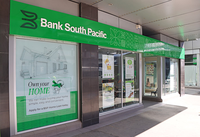
BSP (Bank of South Pacific)
BSP is headquartered in PNG and has the largest ATM network in the country. Machines are found at Jacksons International Airport (Port Moresby), downtown POM, Lae, Mt Hagen, Goroka, Madang, and several provincial capitals. Your first and best option. BSP ATMs generally accept Visa and Mastercard.
Top Pick
Kina Bank
Formerly ANZ PNG, Kina Bank took over ANZ's retail operations in 2020. ATMs in Port Moresby, Lae, and other major towns. The international banking heritage means reliable foreign card processing. A solid second option after BSP.
Recommended
Westpac PNG
Westpac still operates in PNG with ATMs in Port Moresby and Lae. Part of the Australian Westpac group, so foreign cards generally work well. Smaller network than BSP, but a useful backup.
Recommended⚠ Watch Out for Dynamic Currency Conversion (DCC)
Some hotel card terminals may offer to charge you in USD or AUD instead of PGK. Always decline and choose PGK. Choosing your home currency means the hotel (not your bank) sets the exchange rate, which includes a 3–8% markup. Select "PGK" or "local currency" at every prompt. This applies at ATMs too: always withdraw in Kina.
ATMs to Avoid in Papua New Guinea
PNG does not have the predatory tourist-trap ATMs found in Europe. The main challenge is availability and reliability.
ATMs Outside Major Cities
Provincial town ATMs (Wewak, Alotau, Kavieng, Popondetta) exist but are frequently out of cash, offline, or broken. Never rely on a single ATM outside Port Moresby or Lae. Withdraw everything you need before heading to remote areas.
UnreliableHotel Front Desk Currency Exchange
Some Port Moresby hotels will exchange USD or AUD at the front desk, but rates are poor (5–10% worse than the ATM rate). Use hotel exchange only as a last resort. The BSP ATM at Jacksons Airport is a much better first stop.
AvoidPaying by Card in Papua New Guinea
Card Networks
Visa and Mastercard are accepted at international hotels, some dive resorts, Air Niugini offices, and a few larger businesses in Port Moresby. Acceptance is very limited elsewhere
American Express has almost no acceptance in PNG. Do not bring Amex as your only card
Discover is not accepted in Papua New Guinea
Contactless & Mobile Payments
Contactless cards: Very rare. A few modern terminals at top-end hotels in Port Moresby may support tap-to-pay, but do not count on it
Apple Pay and Google Pay: Not supported in PNG
Mobile money (MiCash, CellMoni): PNG has mobile money platforms used by locals, but they require a PNG phone number and bank account. Not practical for tourists
Where Cards Will Not Work
PMV buses and taxis: All public transport is cash-only. PMVs (public motor vehicles) cost K1–5 for local routes
Markets: Gordons Market, Boroko Market, and all local markets are cash-only
Trade stores: Small village shops sell basic supplies for cash. These may be your only supply option in remote areas
Trekking and village stays: Kokoda Track porters, village guesthouse fees, and cultural performance fees are all cash
Domestic flights: While Air Niugini accepts cards for booking, smaller operators and charter flights may require cash or bank transfer
Everything outside Port Moresby: Assume cash-only unless your resort has specifically confirmed card acceptance
Tipping in Papua New Guinea
Tipping Guide
Tipping is not traditional in PNG culture. The concept of reciprocity ("wantok" system) operates differently from Western tipping. However, tourism workers increasingly appreciate tips
Trekking guides and porters: For multi-day treks like the Kokoda Track, K50–100 per day for your lead guide and K20–50 per day for each porter is generous and appreciated. Distribute tips at the end of the trek
Dive masters: K20–50 per day for a dive guide is a welcome gesture at the end of your stay
Hotels and restaurants: Not expected. Rounding up or leaving K5–10 at a restaurant in Port Moresby is a kind gesture but not required
Taxi drivers: No tip expected. Agree on the fare before you get in
Village stays: Do not tip individuals. Instead, bring gifts for the community (see below)
Adventure Travel: Cash Strategy for the Field
Trekking (Kokoda Track & Highlands)
Kokoda Track: The 96km trek takes 4–10 days. You will pass through remote villages with no shops, no ATMs, and no phone signal. All porter fees, village campsite fees, and food costs along the track are paid in cash. Budget K1,500–3,000 for track expenses beyond your operator fee
Highlands trekking: The Highlands Highway region (Mt Hagen, Goroka, and surrounding areas) has BSP ATMs in the main towns, but nothing once you leave. Bring all cash before heading to villages or trekking routes
Small denominations matter: Carry plenty of K2, K5, K10, and K20 notes. Villages and small trade stores cannot break K100 notes. Ask for small bills when withdrawing at ATMs
Waterproof your cash: Rain is constant in PNG. A waterproof pouch or dry bag for cash and documents is not optional
Diving & Island Destinations
Kimbe Bay (New Britain): World-class diving. Walindi Plantation Resort accepts cards, but bring backup cash. Kimbe town has a BSP ATM but it is not always reliable
Milne Bay (Alotau): Tawali Resort and liveaboard diving. Alotau has a BSP branch, but confirm your resort's payment policy before arriving. Bring cash as a backup
Kavieng (New Ireland): Excellent surfing and diving. The town has a BSP ATM, but bring enough cash from Port Moresby in case it is down
Tufi: Remote fjord diving. No ATMs at all. Bring all cash from Port Moresby or Lae
Liveaboard boats: Most liveaboard operations require full payment in advance by bank transfer. Bring cash for tips, local purchases at port stops, and emergencies
Village Visits & Cultural Festivals
Bring gifts, not just cash: When visiting villages, appropriate gifts include rice, tinned fish, sugar, tea, soap, and school supplies. These are valued more than cash in many communities. Buy supplies at a supermarket in POM or a provincial town before heading out
Sing-sing festivals (Mt Hagen, Goroka): Entrance fees are cash-only. Food and craft stalls accept cash only. Budget K200–500 for a festival day including food, drinks, and souvenirs
Betel nut (buai): Offered as a social gesture across PNG. You may be offered some in villages. It is polite to accept. A small bag costs K1–2 at markets
Money Safety in Papua New Guinea
Staying Safe
PNG has real safety concerns. Port Moresby and Lae have high rates of petty and violent crime. This is not a place to be complacent about security. Always stay aware of your surroundings
Do not flash cash. Count money discreetly. Do not pull out large wads of bills at markets or on the street. Use a money belt or hidden pouch for larger amounts
Use ATMs inside bank branches during banking hours. Avoid standalone ATMs at night. The ATMs at Jacksons Airport are relatively safe
Travel with a guide in cities. In Port Moresby and Lae, many visitors arrange transport through their hotel rather than hailing taxis on the street. This is strongly recommended
Highlands safety: The Highlands region can experience tribal conflicts. Travel with a reputable tour operator who knows the current situation. Do not carry more cash than you need for the day
Split your cash. Keep money in multiple locations: money belt, daypack, and locked bag at your accommodation. If one gets lost or stolen, you still have reserves
Bring USD as emergency backup: US dollars (clean, post-2006 bills) are accepted at some hotels and can be exchanged at banks. Carry $200–500 in USD as an emergency reserve in case ATMs fail
Bring a backup card: ATM options are limited and machines do go offline. A second card on a different network (Visa plus Mastercard) is essential insurance
Frequently Asked Questions
Are there ATMs on the Kokoda Track or in remote PNG?
No. The Kokoda Track, Tufi, most islands, and Highlands villages have no ATMs at all. Even provincial towns like Wewak, Alotau, and Kavieng have ATMs that are frequently out of cash or offline. Withdraw all the Kina you need at BSP or Kina Bank ATMs in Port Moresby or Lae before heading to remote areas.
How much cash should I bring for trekking the Kokoda Track?
Budget K1,500–3,000 for track expenses beyond your operator fee. This covers porter fees, village campsite fees, and food costs along the 96km route (4–10 days). Carry plenty of small denominations (K2, K5, K10, K20) since village trade stores cannot break K100 notes. Waterproof your cash in a dry bag.
Can I use credit cards in Papua New Guinea?
Only at international hotels in Port Moresby (Airways Hotel, Hilton, Holiday Inn), some high-end dive resorts (Walindi Plantation, Tawali Resort), and Air Niugini offices. Visa and Mastercard work where cards are accepted. Amex and Discover are not accepted. Everything else is cash-only.
Should I bring USD to Papua New Guinea?
Yes, as emergency backup. Carry $200–500 in clean, post-2006 US dollar bills. USD is accepted at some hotels and can be exchanged at BSP bank branches. The BSP ATM at Jacksons International Airport is a better first stop for getting Kina than hotel front desk exchange (which charges 5–10% worse rates).
Is tipping expected in Papua New Guinea?
Tipping is not traditional in PNG culture, but tourism workers increasingly appreciate it. For multi-day treks like Kokoda, K50–100 per day for your lead guide and K20–50 per day for each porter is generous. Dive masters appreciate K20–50 per day. For village visits, bring gifts (rice, tinned fish, soap, school supplies) rather than cash tips.
Is it safe to carry cash in PNG?
You must carry cash since there are few alternatives, but take precautions. Port Moresby and Lae have high crime rates. Use a money belt or hidden pouch. Split your cash across multiple locations (money belt, daypack, hotel safe). Use ATMs inside bank branches during banking hours. Arrange transport through your hotel rather than hailing taxis on the street.

Skip the Foreign Transaction Fees
The Wise card converts your money at the real mid-market exchange rate. No markups, no surprises. Spend Papua New Guinean Kina like a local.
Get the Wise Card →Quick Comparison
| Method | Cost | Convenience | Best For |
|---|---|---|---|
| BSP / Kina Bank ATMs | Low (no or minimal operator fee) | ★★★☆☆ | Cash for everything outside hotels |
| No-FX-fee card | Best (no fees, mid-market rate) | ★★☆☆☆ | International hotels in Port Moresby |
| USD cash (backup) | Medium (exchange rate loss) | ★★★☆☆ | Emergency reserve, some hotels |
| Hotel front desk exchange | High (5–10% markup) | ★★☆☆☆ | Last resort only |
Papua New Guinea Quick Facts
| Currency | Papua New Guinean Kina (PGK / K). Roughly 4 per USD |
| Cash vs. Card | Cash for almost everything. Cards only at top hotels in Port Moresby and some dive resorts |
| Best ATMs | BSP (largest network), Kina Bank, Westpac. Concentrated in POM, Lae, Mt Hagen |
| Remote Areas | No ATMs on Kokoda Track, Tufi, most islands. Withdraw everything in the city |
| Card Acceptance | Very limited. International hotels and Air Niugini only |
| Tipping | Not traditional. K50–100/day for trek guides, K20–50/day for porters is generous |
| Safety | Keep cash hidden. Use hotel transport. Split money across multiple locations |
| Best Strategy | ATM cash in Port Moresby, small denominations, USD backup, gifts for village visits |