
💰 Quick Context: The Rwandan Franc
Rwanda uses the Rwandan Franc (RWF / FRw). A coffee costs 500–2,000 RWF, a restaurant meal 3,000–10,000 RWF, and a hotel night 30,000–200,000 RWF. Gorilla trekking permits are $1,500 USD (payable in US dollars). Quick math: divide by 1,300 to convert to US dollars, so 10,000 RWF is about $7.70. Kigali is increasingly card-friendly, but outside the capital you should carry plenty of cash.
🎧 Order Rwandan Franc Before You Fly
Have cash in hand when you land. Insured delivery, 2–5 day shipping.
Order RWF → CEI Currency ExchangeCash vs. Card: What to Expect in Rwanda
Rwanda is modernizing rapidly, and Kigali leads the way with growing card acceptance. Outside the capital, however, the country remains very cash-dependent.
Cards accepted in Kigali: Hotels, upscale restaurants, supermarkets, and gorilla trekking lodges accept Visa and Mastercard without issue
Cash-preferred situations: Local restaurants, motos (motorcycle taxis), markets like Kimironko, smaller hotels, rural areas, and tips
Mobile money is dominant: MTN MoMo and Airtel Money are widely used by locals, but require Rwandan SIM registration. Not practical for short visits
How much to carry: 20,000–50,000 RWF ($15–40) is a good daily backup outside of pre-paid activities. Bring more for rural travel
How to Get Francs for Your Rwanda Trip
Rwanda runs a more modern payments scene than most East African neighbors. Cards work at Kigali's Marriott, Rad Blu Radisson, Serena, and Kigali Heights mall, every Volcanoes National Park gorilla-permit office (which prebills permits at $1,500–$2,000 USD per person via card), and most upscale restaurants in Nyarutarama and Kacyiru. Cash still helps at the Kimironko Market in Kigali, moto-taxis (the dominant local ride-hailing form, though some now use SafeMotos with cards), village restaurants, smaller hotels, and rural genocide-memorial-region trips. MTN MoMo dominates locally but requires a Rwandan SIM. Two cheap routes for getting francs: bring USD as backup, plus pull from a Bank of Kigali or BPR ATM after landing.
Bring USD or order francs before you fly
For pre-arrival RWF, two paths. A currency-exchange service like CEI Currency Exchange may stock Rwandan francs on request, with insured 2–5 day delivery. Most US home banks generally do not stock RWF. Backup that works in Rwanda: pack USD $300–500 in clean post-2009 bills (large denominations get noticeably better rates) and exchange at a Kigali licensed forex bureau on landing — the rates around the Kigali City Tower and along KN 5 Road are tight. Rwanda does not have a Bank of America Global ATM Alliance partner. The cleanest setup for most Rwanda trips: pack USD $300–500 for tour deposits and as exchange backup; use a Wise card at Kigali hotel and chain restaurant card payments; and pull francs from Bank of Kigali or BPR ATMs for daily moto fares and market runs.
Withdraw from a Rwandan bank ATM
On the ground, the cheapest source of francs is a major Rwandan bank ATM. Bank of Kigali, BPR (Banque Populaire du Rwanda) Atlas Mara, I&M Bank Rwanda, Equity Bank Rwanda, and Ecobank Rwanda all give the actual interbank rate with no markup. Most charge a per-transaction operator fee for foreign cards (typically RWF 1,500–3,000, posted on the screen before you confirm). Withdrawal limits run roughly RWF 200,000–400,000 per transaction. Bank ATMs cluster around Kigali (Kigali Heights, Kigali City Tower, the airport at KGL arrivals), in Musanze (the Volcanoes National Park gateway), and at Lake Kivu's Gisenyi. Coverage thins fast in the rural southwest. Decline DCC every time the screen offers "charge in USD". See the Best ATMs section below for the bank-by-bank lineup. Want to know what a Bank of Kigali withdrawal will actually cost on your card after fees? Drop it into our ATM fee calculator.
Airport counters & forex bureau touts
Three traps to walk past in Rwanda. The currency-exchange counters in arrivals at KGL (Kigali International) advertise rates that look reasonable but routinely run 5–10% off the interbank rate. The exchange windows inside resort and lodge lobbies (especially around the Volcanoes National Park gorilla-trekking lodges) bake the markup into the rate. Honest exception worth knowing: licensed forex bureaux around Kigali City Tower and along KN 5 Road in central Kigali offer some of East Africa's tightest USD-to-RWF spreads if you've brought USD, often 1–3% off the interbank rate. African Sun Currency Exchange and others are widely used by expats. Third, the standalone independent ATMs at smaller hotel arcades layer DCC pitches and operator fees. Stick to bank-branded ATMs at Bank of Kigali, BPR, I&M, Equity, or Ecobank; decline DCC; and licensed Kigali forex bureaux are the one acceptable cash-to-cash route. Rwanda does not yet have a city-specific guide on this site, but the Best ATMs section below covers the bank lineup.
For a side-by-side comparison of every method (bank wire, travel card, pre-order, ATM, exchange counter) including USD-to-RWF timing tips, see our complete Getting Currency guide →.
Best ATMs to Use in Rwanda
Rwanda's major banks operate ATMs across Kigali and in larger towns. These machines accept international Visa and Mastercard. Your home bank may charge a foreign transaction fee. Always choose RWF when prompted.
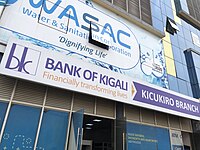
Bank of Kigali
Rwanda's largest bank with the widest ATM network. You will find Bank of Kigali ATMs throughout Kigali, at the airport, and in major towns across the country.
Recommended
I&M Bank Rwanda
Good ATM coverage in Kigali and secondary cities. I&M Bank machines are reliable and support international cards with English-language interfaces.
Recommended
Equity Bank Rwanda
A growing presence in Rwanda with ATMs in Kigali and expanding to other areas. Part of the larger Equity Group, so machines are modern and well-maintained.
Recommended⚠ Watch Out for Dynamic Currency Conversion (DCC)
DCC is rare in Rwanda, but if an ATM or card terminal offers to charge you in USD instead of RWF, always decline. Choosing USD means accepting a markup hidden in their exchange rate. Always select "RWF" or "local currency" at every prompt.
ATMs to Avoid in Rwanda
Standalone ATMs without a bank affiliation are uncommon in Rwanda, but they do exist near tourist areas. Stick to the bank ATMs listed above for the best rates and lowest fees.
Standalone ATMs
Unbranded machines near hotels or tourist areas may charge extra fees and offer poor exchange rates. Walk to the nearest Bank of Kigali or I&M Bank ATM instead.
AvoidPaying by Card in Rwanda
Card Networks
Visa and Mastercard are accepted at hotels, upscale restaurants, and larger shops in Kigali
American Express has very limited acceptance. Do not rely on Amex in Rwanda
Discover is not accepted. Not recommended as a travel card here
Contactless & Mobile Payments
Tap-to-pay works at newer terminals in Kigali's Kigali Marriott, Radisson Blu, and some restaurants in Kimihurura and Kiyovu. Outside Kigali, contactless is essentially nonexistent.
Apple Pay and Google Pay work at select terminals in Kigali, primarily at international hotel chains and higher-end establishments
Mobile money (MTN MoMo, Airtel Money): The dominant payment method for locals, but requires Rwandan SIM registration. Not practical for most tourists
Where Cards May Not Work
Local restaurants: Smaller eateries outside hotel complexes are almost always cash-only
Motos (motorcycle taxis): The most common short-distance transport in Kigali. Cash only
Markets: Kimironko Market and other local markets are entirely cash-based
Rural areas: Outside Kigali, plan on paying for everything with cash
Tipping in Rwanda
Tipping Guide
Tipping is not strongly expected in Rwanda, but appreciated for good service
Upscale restaurants: 10% is a generous tip. Many locals do not tip at casual eateries
Gorilla trek guides: $10–20 per person is customary and greatly appreciated
Hotel porters: 1,000–2,000 RWF per bag is appropriate
Safari/tour guides: $5–10 per person per day is standard
Drivers: Round up the fare or add 500–1,000 RWF for longer trips
Kigali, Volcanoes National Park & Beyond
Things to Know
Gorilla permits cost $1,500 USD: Book months ahead through the Rwanda Development Board (RDB). Payment is accepted in USD, and permits sell out quickly during peak season
Kigali is Africa's cleanest city: Modern infrastructure, well-maintained roads, and a growing number of international-standard hotels and restaurants
Plastic bags are banned: Do not bring plastic bags into Rwanda. They will be confiscated at the airport. Use reusable bags instead
USD cash is widely accepted: Lodges near Volcanoes National Park and safari operators accept US dollars. Bring clean, post-2006 bills for the best acceptance
Kigali Convention Centre area is most card-friendly: The business district around the convention centre has the highest concentration of card-accepting venues
Airport ATMs: Kigali International Airport (KGL) has Bank of Kigali ATMs in the arrivals area. Use these instead of exchange counters
Rwanda is compact: Day trips from Kigali to Lake Kivu, Nyungwe Forest, and even Volcanoes National Park are feasible, so Kigali makes a convenient base
Money Safety in Rwanda
Staying Safe
Rwanda is one of Africa's safest countries. Petty crime rates are low, and Kigali is considered very safe for visitors, even at night
Use ATMs inside bank branches during business hours when possible, especially in smaller towns
Carry a second card on a different network. Bank of Kigali ATMs in rural towns like Musanze (near Volcanoes National Park) can go offline, and having both Visa and Mastercard gives you the best chance of a successful withdrawal outside Kigali.
Tell your bank you are visiting Rwanda before departure. East African transactions are flagged by many fraud systems, and a frozen card in Musanze with gorilla trekking the next morning would be a disaster.
Bank of Kigali ATMs dispense up to RWF 300,000 per transaction (about $230). Since gorilla permits ($1,500) must be paid in advance, your daily ATM cash needs are mainly for meals, transport, and tips.
Frequently Asked Questions
How much does a gorilla trekking permit cost in Rwanda?
$1,500 USD per person, payable to the Rwanda Development Board (RDB). Book months ahead as permits sell out quickly during peak season (June to September, December to February). Payment is accepted in USD. The permit includes a one-hour visit with a gorilla family in Volcanoes National Park.
Do I need cash in Rwanda?
Yes, outside of Kigali's upscale hotels and restaurants. Local restaurants, motos (motorcycle taxis), Kimironko Market, rural guesthouses, and nearly everything outside the capital require cash. Keep 20,000–50,000 RWF ($15–40) as a daily backup. Gorilla trekking lodges and safari operators accept USD.
Should I bring USD to Rwanda?
Yes. USD is widely accepted at lodges near Volcanoes National Park, safari operators, and upscale hotels. Bring clean, post-2006 bills for the best acceptance. Gorilla permits are priced in USD. You can also exchange USD at Bank of Kigali or Equity Bank branches for competitive rates.
Is tipping expected in Rwanda?
Not strongly expected, but appreciated for good service. Gorilla trek guides receive $10–20 per person (customary and greatly appreciated). Safari guides receive $5–10 per person per day. Upscale restaurants: 10%. Hotel porters: 1,000–2,000 RWF per bag. Moto drivers don't expect tips.
Can I use mobile money in Rwanda?
MTN MoMo and Airtel Money are the dominant payment methods for locals, accepted at shops, restaurants, and even market stalls. However, they require Rwandan SIM registration with a local ID, making them impractical for most tourists on short visits. Stick to cash and cards.
Are plastic bags really banned in Rwanda?
Yes. Rwanda has strict environmental laws banning single-use plastic bags. They will be confiscated at the airport. Bring reusable bags for shopping. This is one of the reasons Rwanda (especially Kigali) is known as the cleanest country in Africa.

Skip the Foreign Transaction Fees
The Wise card converts your money at the real mid-market exchange rate. No markups, no surprises. Spend Rwandan francs like a local.
Get the Wise Card →Quick Comparison
| Method | Cost | Convenience | Best For |
|---|---|---|---|
| No-FX-fee card (contactless) | Best (no fees, mid-market rate) | ★★★★☆ | Hotels and upscale restaurants in Kigali |
| Rwandan bank ATMs (Bank of Kigali, etc.) | Low (no operator fee, fair rate) | ★★★★★ | Cash for markets, motos, and rural areas |
| Standalone ATMs | High (fees + poor rates) | ★★★☆☆ | Never recommended |
| Airport exchange counters | High (5–12% markup) | ★★☆☆☆ | Absolute emergency only |
Rwanda Quick Facts
| Currency | Rwandan Franc (RWF / FRw). ~1,300 RWF = $1 USD |
| Cash vs. Card | Card-friendly in Kigali. Very cash-dependent outside the capital |
| Best ATMs | Bank of Kigali, I&M Bank Rwanda, Equity Bank Rwanda |
| Contactless | Growing in Kigali, limited elsewhere |
| Card Acceptance | Good in Kigali hotels and upscale restaurants. Limited outside the capital |
| Tipping | Not strongly expected. 10% at upscale restaurants. $10–20 for gorilla trek guides |
| DCC Risk | Rare. Always choose RWF at ATMs and terminals |
| Best Strategy | No-FX-fee card for Kigali hotels. Bank ATM cash for everything else |